

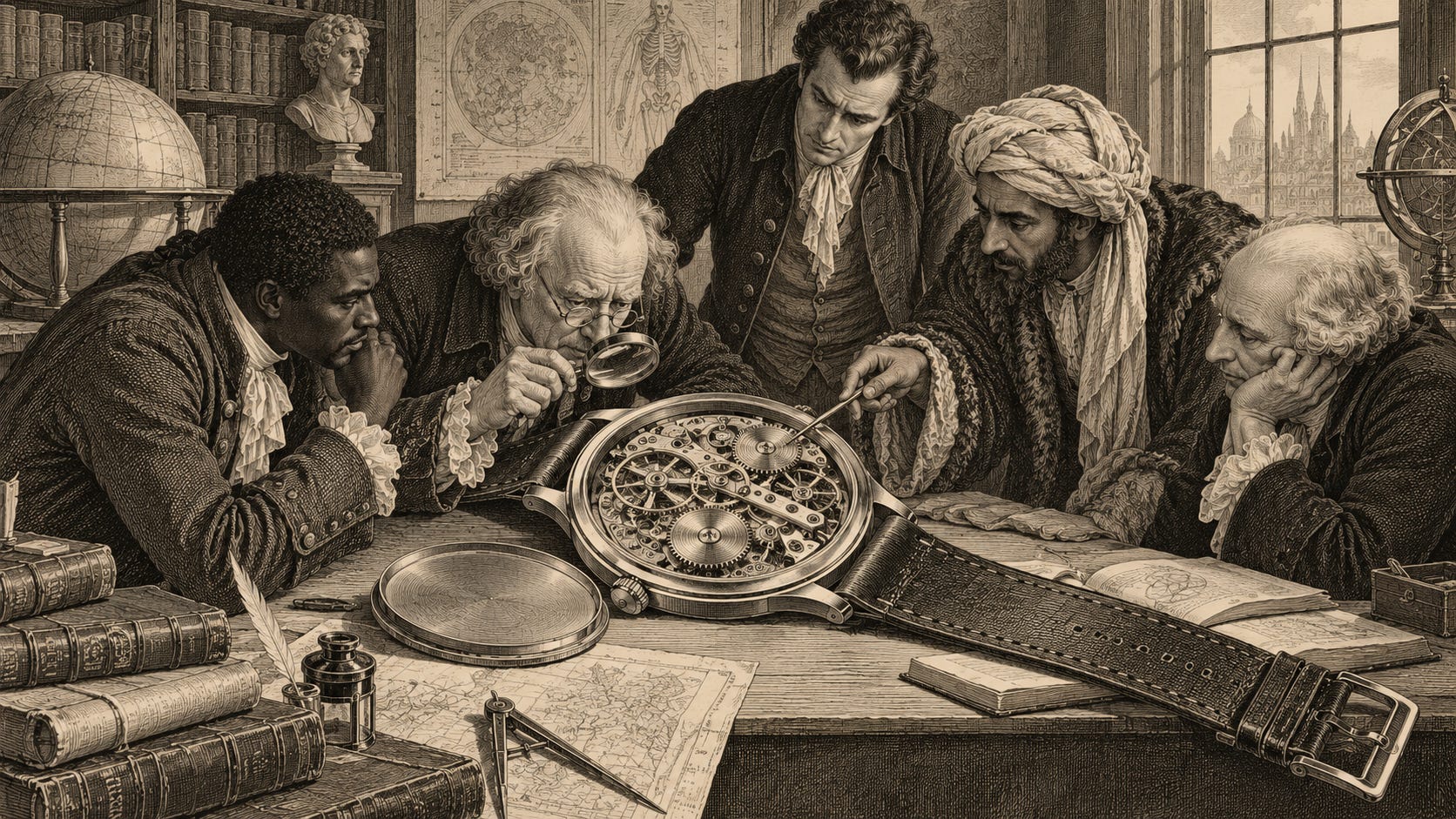
I like wearables. I pay attention to health data myself, and I suspect that simply paying attention to things like activity, sleep, heart rate, fitness and blood pressure probably leads most people to make better choices; there is nothing trivial about that. What I am less convinced by is the much bigger promise that has attached itself to the category. Namely that the sensors will keep getting better, we will collect billions more data points, learning models will get smarter and eventually the watch on your wrist or ring on your finger (or the eyeglasses, socs, headbands, piercings etc.) will be able to tell you, and your doctor, that you have a specific disease. More importantly, it will find it early enough that something useful can be done about it.
There is also a prevailing insistence that we are already somewhere along this path and the remaining problem is mostly adoption. Namely that doctors need to accept the data, health systems need to integrate it, and reimbursement needs to catch up. Once medicine gets out of the way, all of this information can finally start changing lives at scale. I don’t think that is the main problem here; it’s more fundamental.
The technology view is roughly:
Sensor → Data → AI → Diagnosis.
Medicine requires something more like:
Signal → Valid measurement → Clinical meaning → Decision threshold → Intervention → Better outcome → Economic value.
A measurement can be accurate without being clinically useful. Something can be clinically interesting without changing a decision, and even something that changes a decision does not necessarily improve an outcome or the economics of delivering care. You cannot solve those problems by badgering doctors to accept the data; they have to be demonstrated.
But even if we sorted all of that out, I think there is a more basic problem with the larger promise of wearables. There may simply not be enough signal. Machine learning can find information hidden in a signal, but it cannot find information that isn’t there. A device sitting on the surface of your wrist has access to a relatively small window into what is happening inside your body. It can see movement, temperature, peripheral blood flow, some electrical activity and things that can be calculated or inferred from those signals. We can measure all of those things better, measure them continuously, establish a personal baseline over years and compare it with data from hundreds of millions of other people. I am certain we will learn useful things from that. What doesn’t follow is the assumption that enough data eventually turns those narrow signals into broad diagnostic information.
For a wearable to find a specific disease early, the disease has to change something the sensor can actually see. It has to do it early enough to matter and in a way that can be distinguished from exercise, stress, infection, medication, aging, alcohol, poor sleep and ordinary human variation. That is a pretty demanding requirement. More data may reveal a weak signal, but it cannot create one.
This is also not how most important diagnostic advances have happened. Medicine has generally progressed by getting access to new information. ECG exposed the electrical activity of the heart. Blood tests gave us access to chemistry. X ray, ultrasound, CT and MRI allowed us to observe anatomy and physiology that simply wasn’t available to us before. Even continuous glucose monitoring is instructive. We wanted to know what glucose was doing, so we put a sensor into interstitial fluid and measured something much closer to the thing we actually wanted to know. We didn’t eventually figure out how to infer glucose from sleep, movement and pulse because we had collected enough of them.
There is something strange about the assumption that the next great diagnostic revolution requires no comparable expansion in what we can observe. We will measure roughly the same convenient surface signals a few trillion more times, apply a sufficiently powerful model and eventually the diseases will reveal themselves. Perhaps some will, and I would be surprised if large longitudinal datasets don’t produce some genuinely important discoveries. But “we will have enough data eventually” is not evidence that the information is actually there.
None of this means wearables are unimportant. In fact, I think we may be underselling the thing they are already particularly good at. Preventive medicine has never really taken hold. We have known for decades that activity, weight, fitness, sleep, blood pressure, smoking, alcohol and a fairly boring list of other things have enormous effects on long term health. People still spend years doing things that hurt them and eventually arrive in the medical system, which remains remarkably good at acting as the repair mechanic at the other end.
Wearables can operate much farther upstream. A watch doesn’t have to diagnose heart failure three years before a cardiologist can. If seeing your activity fall, your fitness deteriorate, your weight rise or your blood pressure drift in the wrong direction causes you to do something about it, that matters. If years of personal data and good coaching make those changes easier to see and harder to ignore, even better.
Monitoring your own health is probably one of the more useful things you can do with the computer you carry around all day. That is already a very large opportunity, and we don’t need to pretend there is eventually going to be a doctor hiding inside the watch to make it one.