

Five years ago I almost lost my life. For those who know me, the story has become a standard fixture in my narrative; it gets mentioned often. For those who don’t know me, it’s not that important, but there are a couple of things that came out of it that are worth talking about.
The disease was rare, unexpected and incredibly sudden. I went from annoying flu symptoms to cascading organ failure in about 24 hours. While I was on life support (in a coma), an ICU doctor told my wife, I was the sickest person he had seen who was still technically alive. Even then, I almost slipped away more than once. They said that even if I did survive, my prognosis was not good. I would have permanent kidney and liver damage and need transplants. I would likely have heart damage, and I could expect to lose at least some of my arms and legs. There was also good chance that I suffered cognitive damage from lack of blood flow to the brain. If I came home at all, it would not be in one piece. I might not even be me anymore. It was a lot to process.
Recovery was both long and painful. In fact it permanently rewired how I perceive and process pain. I spent a lot of time in hospital where I learned to listen to my body, focus on its signals and the metrics of my progress. I remember my pulse O2 indictor dropping and wondering with the nurses if I just collapsed a lung (I did), I remember convincing a doctor that I had a blood clot tearing slowly through my left arm (I did), I remember the exact day I produced more than 20ml of urine signalling hope that a kidney may still come back (it did). After some months, and numerous surgeries and a lot of physical therapy, I was more less myself again. And during that time, every step forward demanded that I be super proactive, even if that step was going to be the last progress I see. I’m different now of course, but I’m still me, and I’m grateful. I’m grateful for the fantastic recovery and for all those who helped me. And believe it or not, I am also grateful for the experience.
For me, the most profound part of the experience was the realization that your survival and recovery have a lot to do with the quality of participation from your side. Advocacy, information and understanding had a huge positive impact on my outcome. The doctors and nurses were outstanding of course, but on at least one occasion, it was my wife (who never left my side while I was on life support) who saved my life by directing attention to something they missed. Advocacy matters: even though my prognosis was poor, she learned everything she needed to know and was a huge influence on the attention I received. I don’t think they were expecting me recover, but she did, and she made them believe it too. She even found herself occasionally providing leadership and stability to the care team when things got crazy.
Weeks later, when I was conscious again, I took an active role in my own care. I learned my biometrics. I understood and processed my odds. I collected my own data and fed the observations back to my care team so we could make better decisions together. Of course it all could have gone horribly wrong, but it didn’t. I’m now convinced that people who take an active role in their own care, and have advocates or advocate for themselves, see better outcomes. I now have a huge appreciation for the value of being part of your own care team, as opposed to a helpless passenger. I am even more impressed by how responsive good doctors and nurses are to your insights and observations, especially if they are empirical and specific. They want what you want, and they appreciate the help.
A few weeks ago, the team at Sparrow Bioacoustics launched Stethophone. It’s Software as a Medical Device that run on your phone. Once installed, you basically hold the phone it to your chest and the system listens for bioacoustic signals from your heart and lungs…like a doctor would using a high end stethoscope.
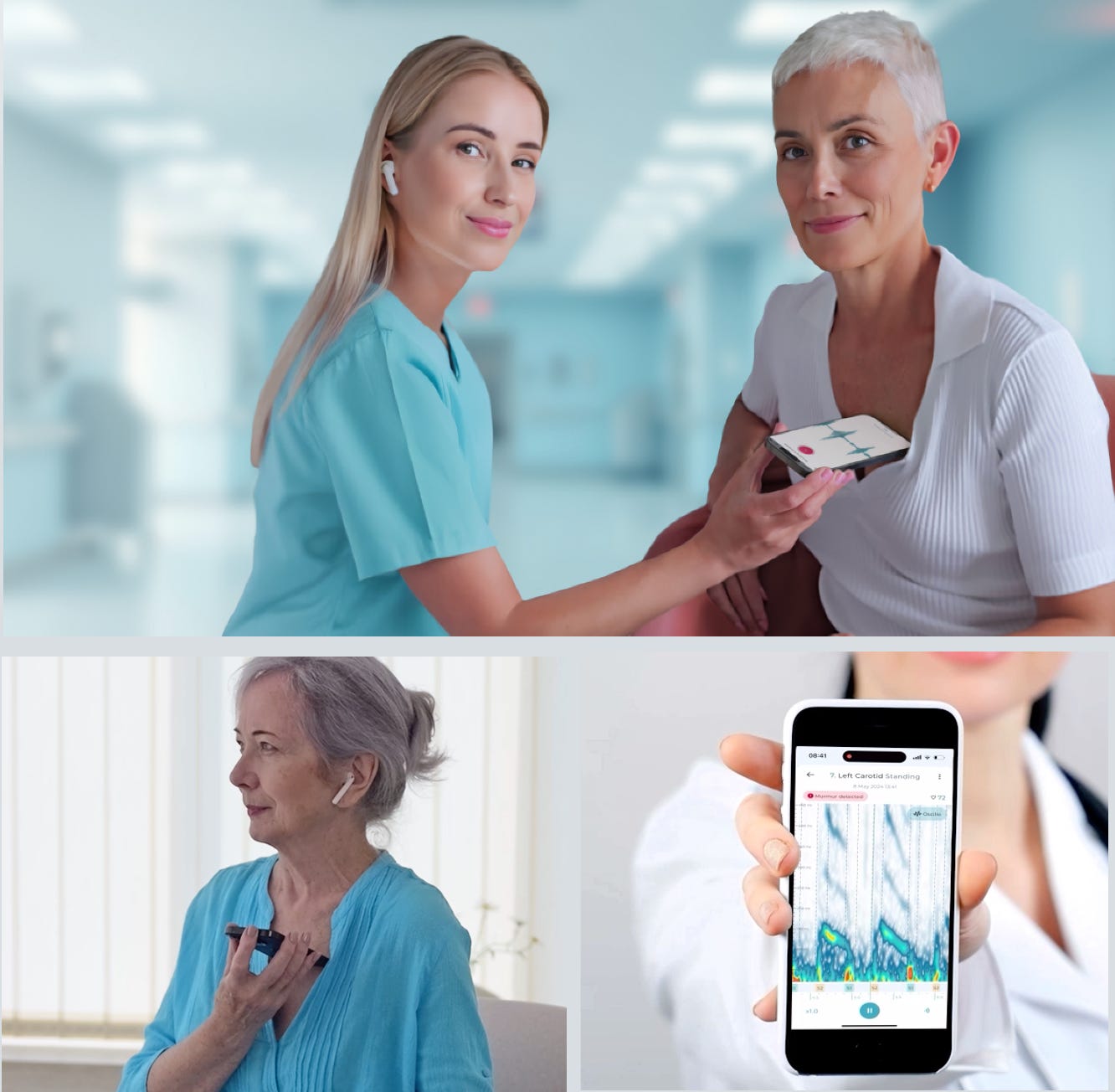
Why? The Incidence of heart disease that goes undetected or under-treated in the population is staggering. Detection of structural rhythmic conditions needs to happen sooner; before obvious symptoms present. And we need more accessible and more empiriacle ways to capture clinical information when it counts; before permanent damage is done. That is what Stethophone is all about. It’s not a panacea of course, but the information it can record is diagnostically deep. We have helped people who were anxious about periodic cardiac symptoms and wanted a medically powerful way to show their doctors what was happening. We have helped detect serious disease hundreds of times in clinical and remote settings during our early pilots. We are still taking our first steps, and we still have a lot to bring forward for both heart and lung conditions, but I feel very close to this kind of value proposition because it scales. It holds the promise that millions of people can benefit while helping medical systems improve how patients flow through the system. Im grateful my heart hung on just long enough to give me and my care team the chance I needed, as long as your heart keeps going, you always have a chance. We want that for everyone.
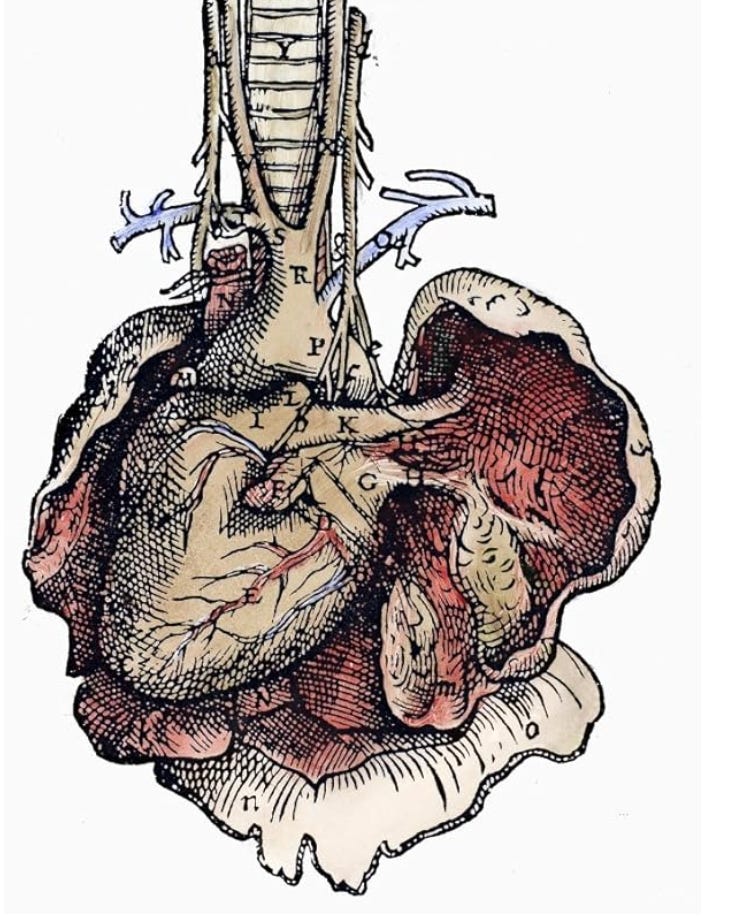
Andries van Wezel (31 December 1514 – 15 October 1564), latinized as Andreas Vesalius (/vɪˈseɪliəs/),[2][a] was an anatomist and physician who wrote De Humani Corporis Fabrica Libri Septem (On the fabric of the human body in seven books), which is considered one of the most influential books on human anatomy